Dongbei & Shanxi
东北与山西
Enormous portions, vinegar on everything, and thirty named shapes of noodle.
Photo: CYAN · CC BY-SA 4.0 · resized
Two cold, wheat-growing traditions that are rarely covered abroad. Dongbei — the northeast — cooks for a −25°C winter: big stews, cabbage pickled in barrels, potato and pork in quantity, plus a Russian and Korean influence you can taste in the sausage and the cold noodles. Shanxi, on the loess plateau, is the noodle heartland: over thirty distinct forms, shaved, pinched, rolled, pulled and cut, plus an aged black vinegar that locals put on everything and occasionally drink neat.
06Dishes to seek out
-
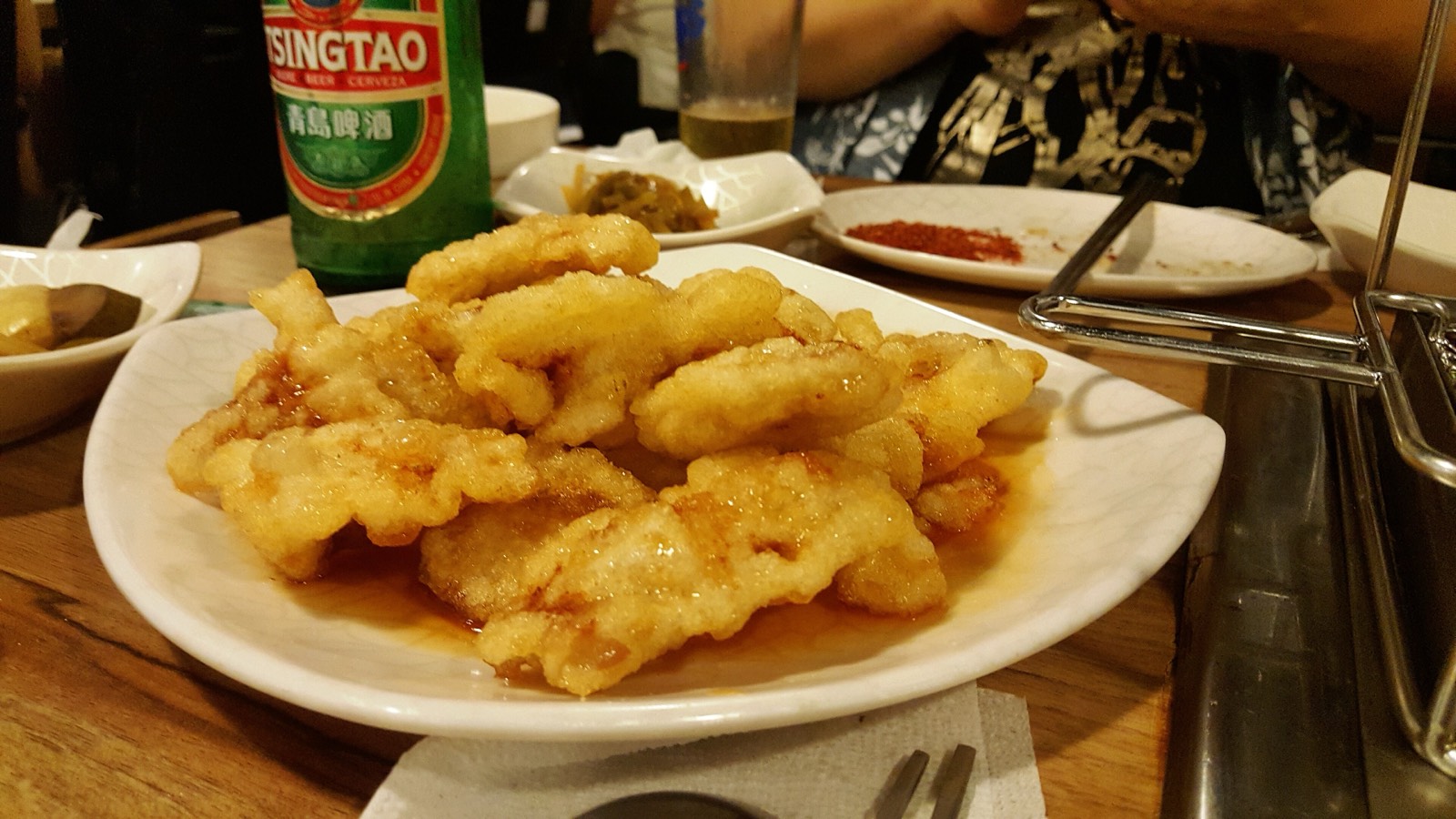
Guo bao rou 锅包肉
Sweet-and-sour fried pork in a shatteringly crisp batter, invented in Harbin around 1907 to suit Russian diplomats' palates.
-
Knife-shaved noodles 刀削面
Shaved from a block of dough straight into boiling water with a curved blade. Thick in the middle, thin at the edges, and chewy in a way machine noodles never are.
-
Pork and cabbage stew 猪肉炖粉条
Pork belly, pickled cabbage and sweet-potato glass noodles, stewed in one pot. The definitive Dongbei dish and portioned for four.
-
Korean-Chinese cold noodles 冷面
Buckwheat noodles in an icy beef-and-pear broth, from the Yanbian Korean prefecture. Eaten in the depths of winter, which locals find perfectly reasonable.
-
Aged Shanxi vinegar 山西老陈醋
Fermented and aged for years, thick and almost sweet. Put it on dumplings, noodles, and — if you are being polite in Taiyuan — drink a small cup of it.
-
Iron pot fish 铁锅炖
A whole fish stewed in a wok set into the table, with cornbread patties stuck round the rim to steam. Communal and enormous.