Huangshan (Yellow Mountain)
黄山 · Huáng Shān
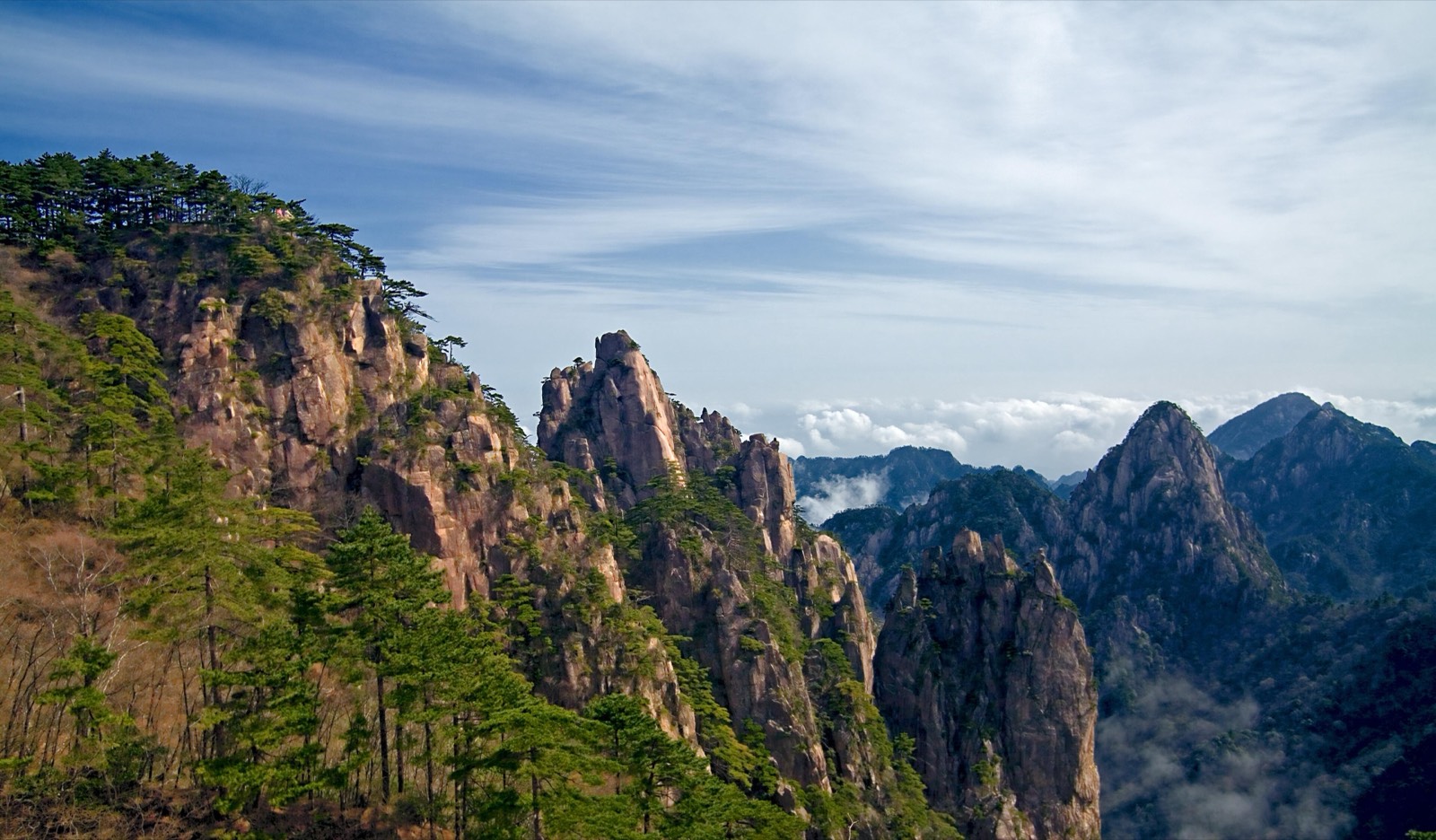
Granite spires, twisted pines and a sea of cloud — the mountain that taught Chinese painting what a mountain looks like.
Huangshan is the most beautiful mountain in China and it is not really close. Seventy-seven peaks over 1,000 metres of weathered granite, sheared into vertical spires and slabs, with Huangshan pines rooted in bare rock at angles that should be impossible, and a cloud layer that sits below the summits for well over 200 days a year. When the cloud fills the valleys and only the peaks show, the effect — the yunhai, sea of clouds — is exactly the shan shui landscape scroll you have seen in every museum, because this is the mountain those painters were painting.
It has been a pilgrimage and painting destination since the Tang. The infrastructure now is thorough: three cable cars, thousands of stone steps, guesthouses on the summit ridge, and a one-way circuit system that keeps the crowds moving. This is not wilderness — expect handrails, vendors and, at the famous viewpoints, queues. It is still worth every minute.
The right way to do it is to go up in the afternoon, stay the night on the mountain, catch the sunrise, and descend the next morning. Summit hotels are expensive and basic for the price, and they sell out weeks ahead in season. Below the mountain, the Huizhou villages of Hongcun and Xidi make the perfect second half of the trip.
Why go
- The single most spectacular landscape in eastern China
- The cloud sea, which is genuinely common rather than a once-in-a-lifetime fluke
- A well-run trail network that lets you choose between a gentle circuit and a serious hike
- The Huizhou villages and Hongcun below, an easy and beautiful pairing
Highlights
Bright Summit & Beihai
The northern circuit, with the widest cloud-sea views and the main cluster of summit hotels. Sunrise is watched from Refreshing Terrace or Monkey Watching the Sea.
Welcoming Pine
The 1,500-year-old pine at Yuping, arms outstretched, that appears on everything from banknotes to hotel lobbies. Absurdly crowded and still remarkable.
West Sea Grand Canyon
The most dramatic walking on the mountain: a staircase cut into the canyon wall with drops on both sides, plus a small monorail at the bottom. Four hours; closed in winter.
Lotus and Heavenly Capital Peaks
The two highest, opened on alternating multi-year cycles to let vegetation recover. Steep, exposed, chain-railed and thrilling.
Tangkou hot springs
At the mountain's foot, the traditional way to deal with legs that have done 10,000 steps.
Photographs
Getting there & practicalities
Getting there
Huangshan North station on the high-speed line: 2h30 from Shanghai, 2h from Hangzhou, 5h from Beijing. Then a 1-hour bus to Tangkou, and a shuttle to the Yungu or Mercy Light cable car bases.
Tickets
¥190 mountain entry March–November (¥150 winter). Cable cars ¥80–90 each way. The West Sea monorail is ¥100.
Opening hours
Cable cars roughly 06:30–17:30, extended in summer. The mountain itself is open through the night if you are staying up top.
Best time of day
Go up after 13:00 (the day-trip crowd is descending), stay overnight, be on the terrace 40 minutes before sunrise.
What everyone gets wrong
- Book a summit hotel the moment your dates are set. In October they are gone a month ahead.
- Weather changes fast and the mountain is 10°C colder than Tangkou. Take a fleece and a rain shell even in July.
- Porters carry supplies up on shoulder poles — stand aside on the stairs, they have right of way and they are carrying 60 kg.
- The West Sea Grand Canyon is the best part of the mountain and the part most day-trippers skip.
- Winter, after snow, is exceptional and nearly empty — but several trails close and the canyon is shut.
What to eat
- Huizhou stinky mandarin fish — fermented, firm, and much better than it smells
- Wild bamboo shoots and mountain vegetables; and Maofeng tea grown on the lower slopes
→Combine it with
Nearby and next
 UNESCO
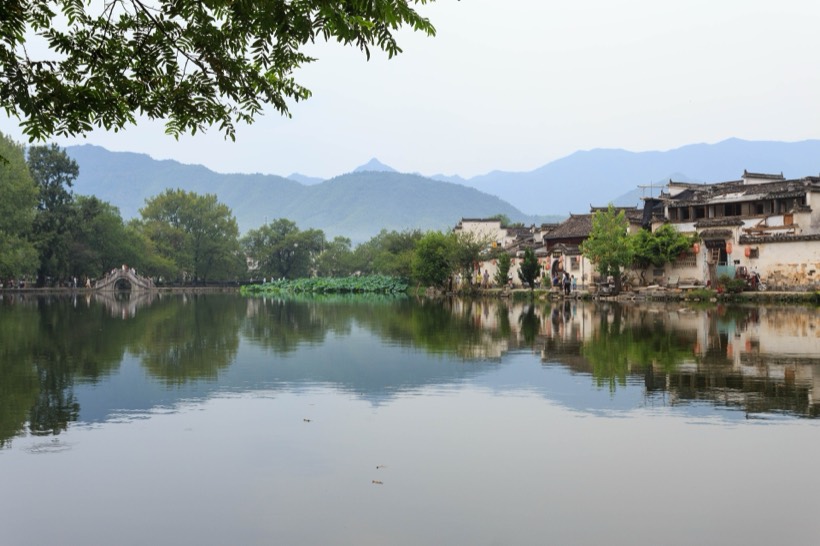
Hongcun & Xidi 宏村与西递
White walls, black tiles, and a village laid out in the shape of an ox with a stream running through every house.
 UNESCO
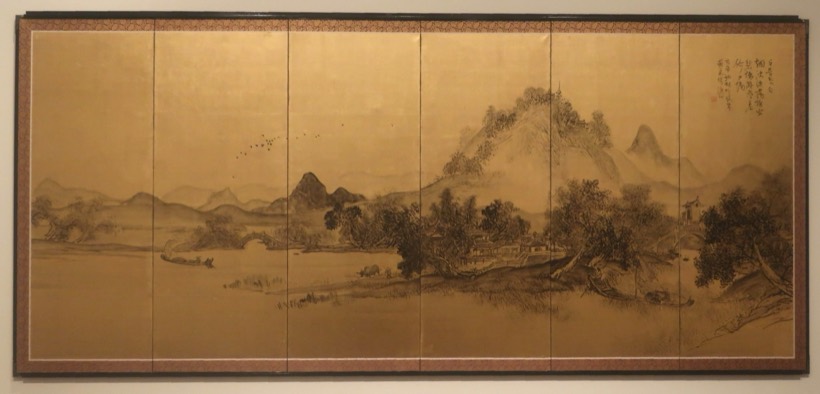
West Lake, Hangzhou 西湖
The most painted, poeticised and imitated lake in Asia — and a UNESCO listing for its influence on garden design across East Asia.
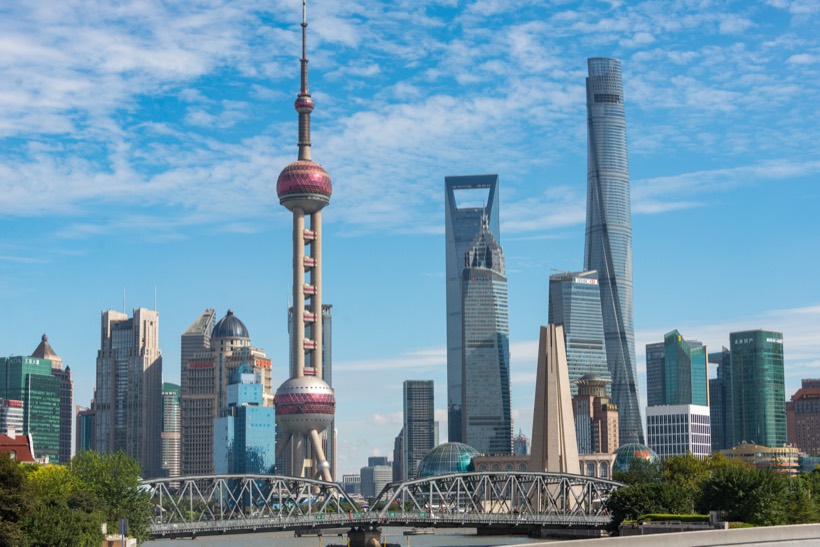
Shanghai 上海
A 1920s waterfront staring across a river at the tallest skyline in Asia, with the best restaurant scene in China in between.