Qinghai Lake & Chaka
青海湖与茶卡盐湖 · Qīnghǎi Hú & Chákǎ
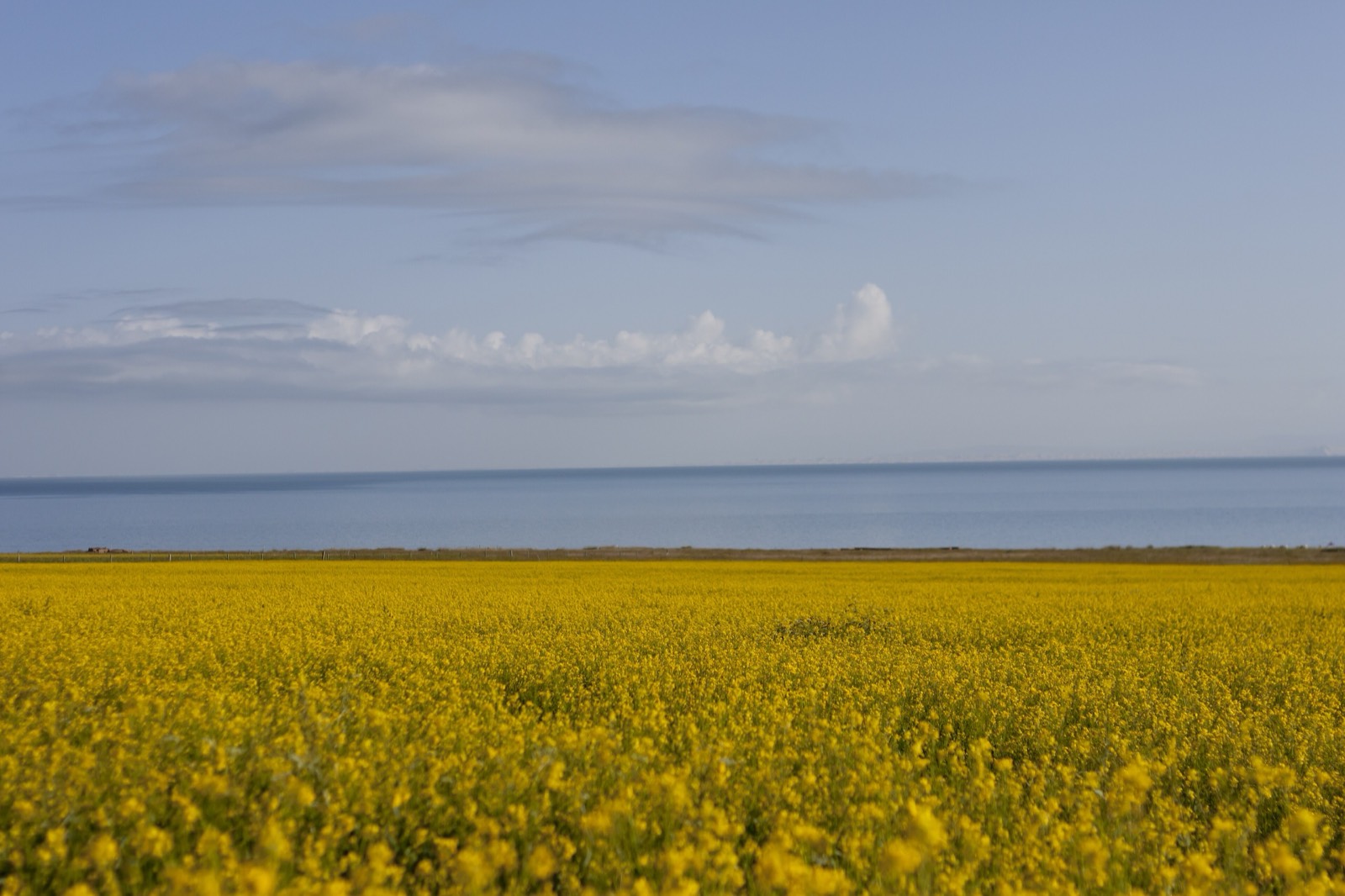
China's largest lake, saline and 3,200 metres up, ringed by rapeseed fields that turn the shore yellow every July.
Photo: Jucember · CC BY-SA 3.0 · resized
Qinghai Lake — Kokonor in Mongolian, Tso Ngonpo in Tibetan, all three names meaning 'blue lake' — covers 4,300 km² on the northeastern edge of the Tibetan plateau. It has no outlet, so it is saline and slowly shrinking, and at 3,205 metres the water is an intense, almost artificial blue against yellow grassland and, in the distance, snow.
The trip is a circuit: roughly 360 km of road around the lake, done over two days by car or four to five by bicycle, which is a well-established thing among Chinese cyclists. In July the rapeseed comes into flower along the northern shore and the contrast of yellow field, blue water and white peak is the image that draws everyone. Bird Island on the western shore is a major breeding site — bar-headed geese, which fly over the Himalaya at 7,000 metres, stage here.
Chaka Salt Lake, 100 km southwest, is the other half of the trip: a shallow salt pan where a few centimetres of brine over a white crust makes an almost perfect mirror. It has become enormously popular on Chinese social media, which means crowds and a rigorous shoe-cover policy, but at sunrise with a thin layer of water and no wind it is still remarkable. Kumbum Monastery near Xining, one of the six great Gelugpa monasteries and the birthplace of Tsongkhapa, completes the loop.
Why go
- High-plateau landscape without the permit requirements or altitude of Tibet proper
- July rapeseed against the lake, one of the most colour-saturated scenes in China
- Kumbum Monastery, a major Tibetan Buddhist centre 25 km from Xining
- A good acclimatisation stop if you are heading onward to Lhasa by train
Highlights
Erlangjian / Southern shore
The main developed viewpoint with boardwalks to the water. Touristy but the easiest access to a shoreline that is otherwise fenced.
The northern shore rapeseed
Around Gangcha in July — kilometres of yellow field running down to blue water. Roadside stops are free and better than the ticketed viewpoints.
Chaka Salt Lake
The mirror. Go for the 07:00 opening before wind ruffles the surface and the crowds arrive. A small train runs out onto the pan.
Kumbum (Ta'er) Monastery
25 km from Xining: nine great halls, gilded roofs, yak-butter sculpture, and pilgrims doing full-body prostrations around the kora.
Qinghai–Tibet railway
The world's highest railway starts from Xining and crosses the 5,072 m Tanggula Pass to Lhasa. The 21-hour ride is a destination in itself.
Photographs
Getting there & practicalities
Getting there
Xining is the base — 2h by high-speed rail from Lanzhou, 5h from Xi'an, and it has an airport. The lake is 150 km west; tour buses, hired cars (¥600–800/day) and organised two-day circuits all run from Xining.
Tickets
Erlangjian ¥100; Bird Island ¥60 (closed during peak breeding); Chaka Salt Lake ¥60 plus ¥50 for the pan train; Kumbum Monastery ¥80.
Opening hours
Chaka 07:00–19:00; Kumbum 08:00–17:00.
Best time of day
Rapeseed peaks in the second half of July. June and September are clearer and far less crowded.
What everyone gets wrong
- Xining is at 2,275 m and the lake at 3,200 m. Spend a night in Xining before going up.
- Chaka requires shoe covers (¥10–20) and gets extremely busy after 10:00. Sunrise or don't bother.
- Much of the lakeshore is fenced by ticketed operators. The best free views are simply pulling over on the G109 north shore.
- Weather on the plateau changes fast and it can hail in July. Take a warm layer and sunscreen — the UV at 3,200 m is severe.
- This is the standard acclimatisation route for the train to Lhasa; if Tibet is on your plan, do these in order.
What to eat
- Xining's Muslim quarter: hand-pulled noodles, lamb offal soup, and yoghurt with sugar
- Tibetan tsampa and butter tea at the lakeside; and Qinghai's excellent lamb, simply boiled
→Combine it with
Nearby and next
 UNESCO
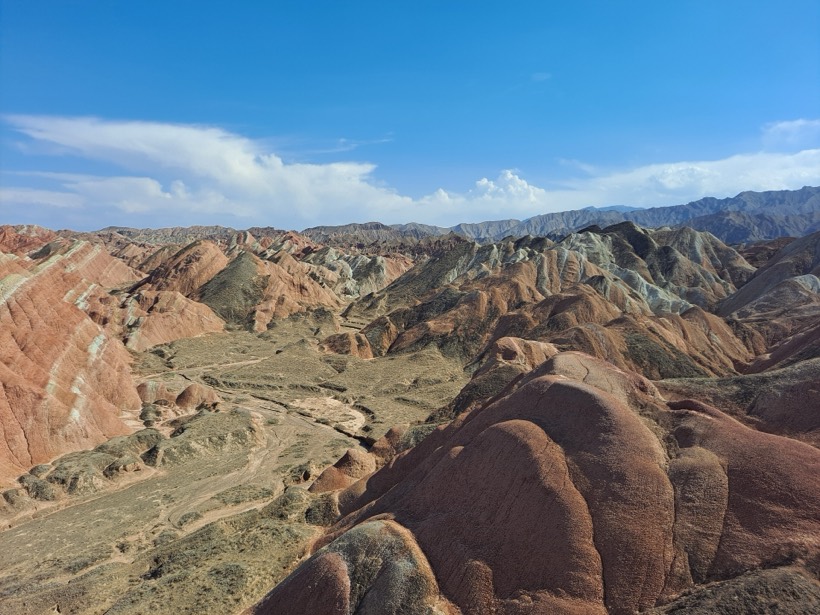
Zhangye Danxia 张掖丹霞
Hills striped in red, orange, yellow and green — twenty-four million years of mineral sediment tilted on its side.
 UNESCO
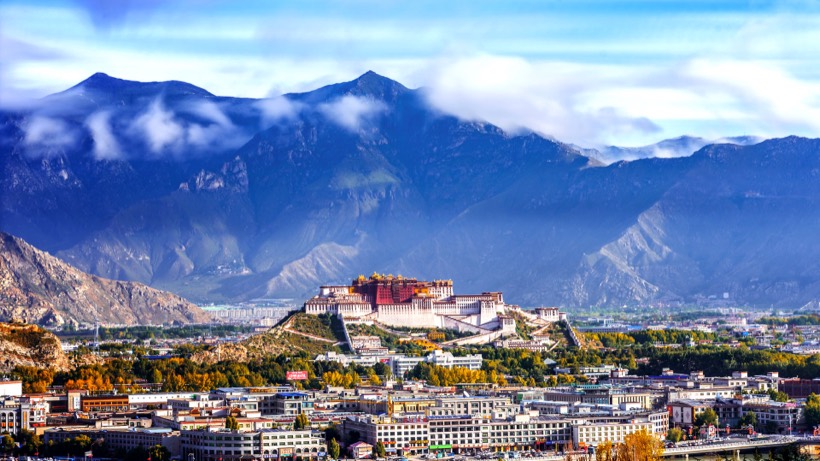
Lhasa & the Potala 拉萨与布达拉宫
A thousand-room palace on a rock at 3,700 metres, and a pilgrimage circuit that has not stopped turning for thirteen centuries.
 UNESCO
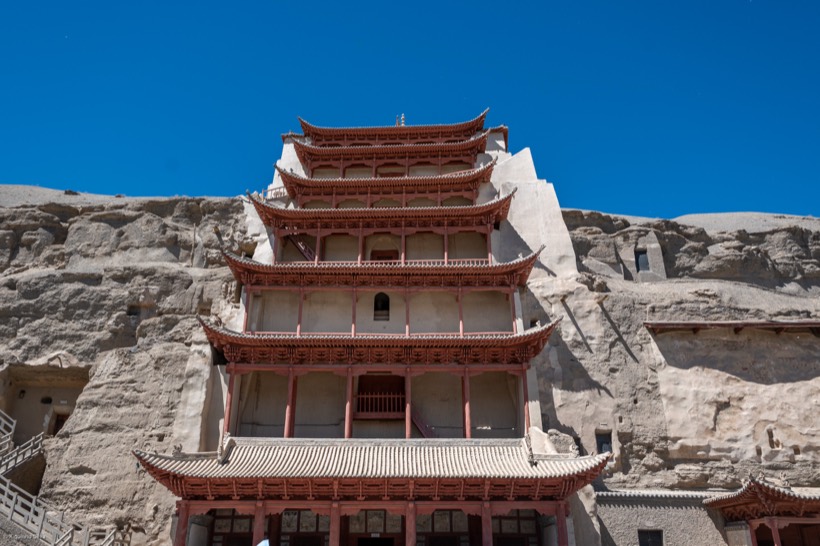
Mogao Caves & Dunhuang 莫高窟与敦煌
Four hundred and ninety-two painted caves in a desert cliff — a thousand years of Buddhist art, sealed and forgotten for nine centuries.