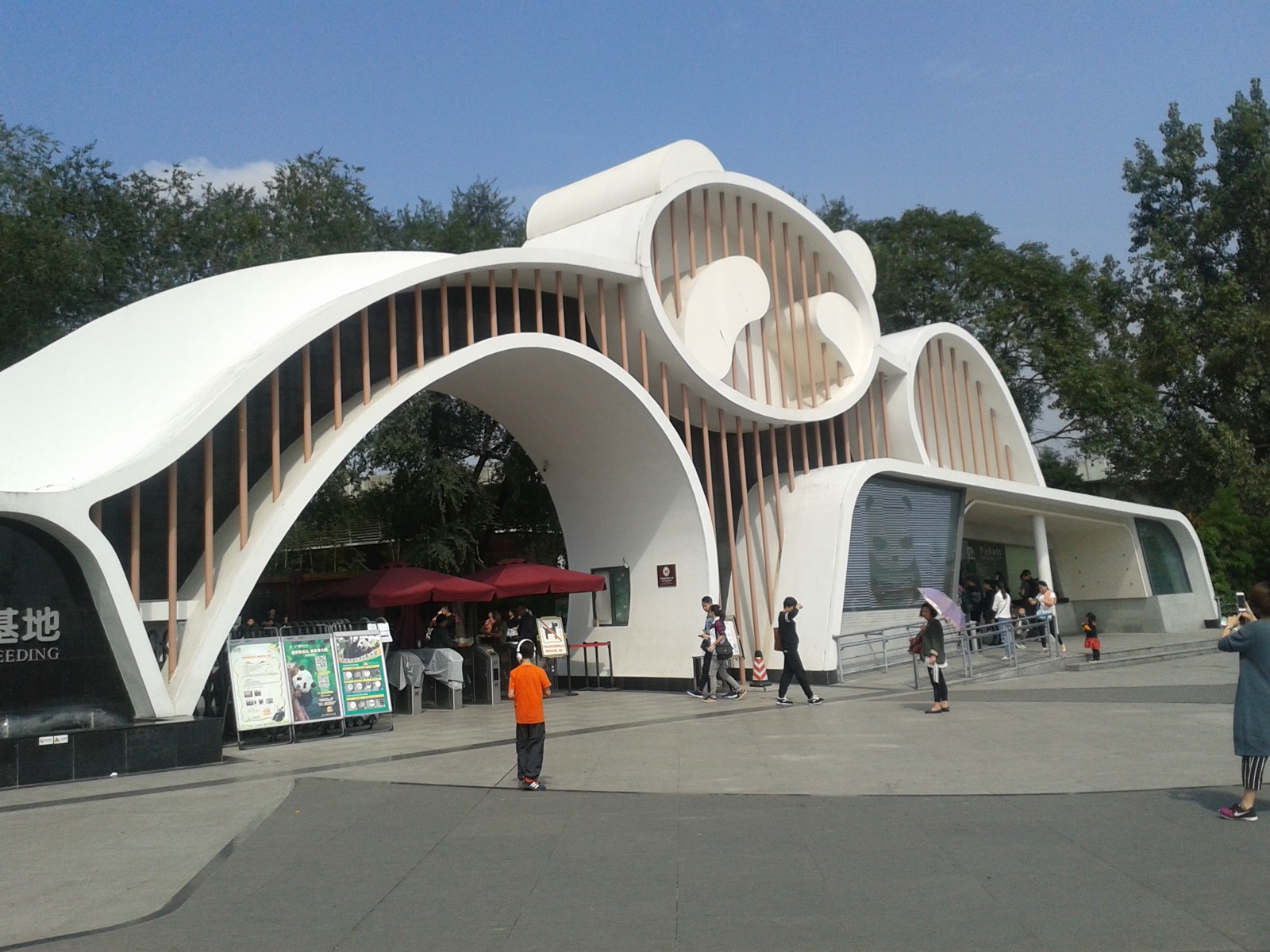
Chengdu & the Panda Base
成都 · Chéngdū
Pandas at breakfast, mahjong in a teahouse by ten, and the most numbing food in China by dinner.
Photo: Kreisverkehrsampel · CC BY-SA 3.0 · resized
Chengdu has a reputation inside China as the city that refuses to hurry. It sits in the Sichuan basin, a fertile bowl ringed by mountains, under a permanent soft overcast — locals joke that dogs bark at the sun. The result is a culture built around teahouses, mahjong, long lunches and a general suspicion of ambition, which after a week of Beijing and Shanghai is exactly what most travellers want.
The pandas are the headline. The Chengdu Research Base, 10 km north of the city, holds around 200 giant pandas across large enclosures, and its breeding programme is the reason the species moved off the endangered list in 2016. Go at opening: pandas are fed at 08:30, are active for perhaps two hours after that, and spend the rest of the day asleep in a tree. The nursery, when there are cubs, is the reason people cry in public.
Then there is the food. Sichuan cooking is not simply hot — the defining sensation is ma la, the numbing tingle of Sichuan peppercorn against chilli heat, and the province's cooks use over twenty distinct flavour profiles of which only a handful involve chilli at all. Chengdu is a UNESCO City of Gastronomy and the street snack culture around Kuanzhai Alley and Jinli is worth two days on its own.
Why go
- The best place in the world to see giant pandas, and it is genuinely a conservation success story
- Teahouse culture at People's Park — bamboo chairs, bottomless tea, ear-cleaners
- The gateway to Jiuzhaigou, Leshan, Emei and the Tibetan areas of western Sichuan
- Sichuan food at source, which is a different experience from Sichuan food anywhere else
Highlights
Chengdu Panda Base
Arrive for the 07:30 opening. Walk to the furthest (Moonlight Nursery) enclosures first and work back — everyone else does the reverse and the pandas are asleep by 10:30.
People's Park & Heming Teahouse
Bamboo chairs, a bottomless cup of jasmine for ¥20, mahjong, matchmaking corner on Sundays, and ear-cleaners with tuning forks.
Sichuan opera & face-changing
Bianlian, where performers change painted silk masks in a fraction of a second by a method that is a protected state secret. Shufeng Yayun in Chengdu Culture Park is the real one.
Jinsha Site Museum
A 3,000-year-old Shu culture site found during construction in 2001 — gold sun-bird foil, jade and ivory from a civilisation with no written records. Excellent museum.
Dujiangyan
An hour away: an irrigation system built in 256 BC that still works, still waters the Chengdu plain, and has no dam. A UNESCO site and a genuine engineering marvel.
Kuanzhai Alley & Jinli
Restored Qing lanes, heavily commercial, but the snack density is high and the evening atmosphere is good.
Photographs
Getting there & practicalities
Getting there
Chengdu East station: 3h from Xi'an, 7h from Beijing, 11h from Shanghai. Two airports (Tianfu and Shuangliu) with wide international connections. Metro Line 3 runs to the Panda Base.
Tickets
Panda Base ¥55, book online. Jinsha Museum ¥70. Dujiangyan ¥80. Opera shows ¥180–320.
Opening hours
Panda Base 07:30–18:00 (last entry 17:00). Museums 09:00–17:00, mostly closed Mondays.
Best time of day
Panda Base at 07:30 sharp. Everything else in Chengdu can wait until you have had lunch.
What everyone gets wrong
- Do not book a 'panda holding' experience. Legitimate ones no longer exist at the Chengdu base and the operations that offer it are not ones you want to fund.
- Dujiangyan Panda Base is quieter than Chengdu's and pairs with the irrigation works for a good full day.
- Order 'wei la' (mildly spicy) if you are unsure — Chengdu restaurants are used to the request and will not judge you much.
- Chengdu is the launching point for western Sichuan's Tibetan areas, which need no permit unlike Tibet proper.
- The city is genuinely grey and drizzly for much of the year. Do not plan around sunshine.
What to eat
- Mapo tofu at Chen Mapo, where it was invented in 1862
- Dan dan noodles, zhong dumplings in sweet soy, and sweet-water noodles (tian shui mian)
- Hotpot — Shu Da Xia or a neighbourhood place; order a yuanyang split pot if the ma la is too much
- Chuan chuan xiang: hotpot on skewers, paid by the stick, eaten at plastic tables until 3am
→Combine it with
Nearby and next
 UNESCO
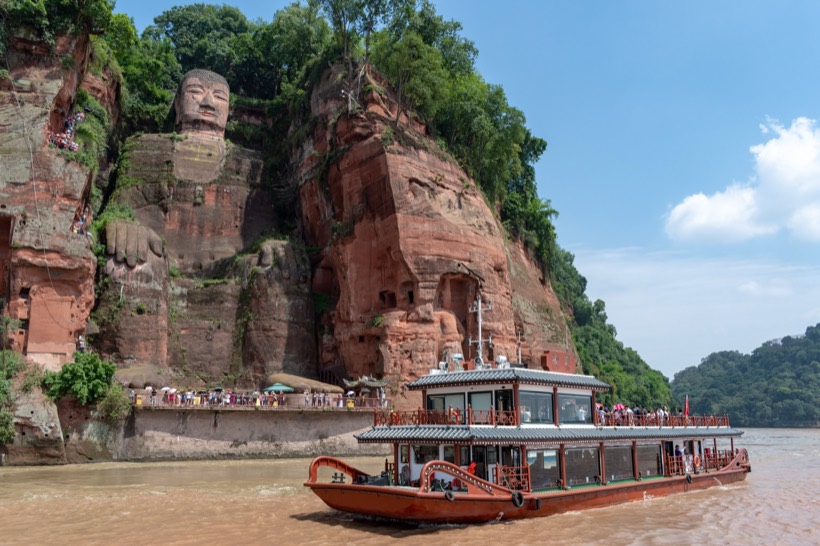
Leshan Buddha & Mount Emei 乐山大佛与峨眉山
A 71-metre Buddha carved into a river cliff over ninety years, and a Buddhist mountain where the macaques rob you.
 UNESCO
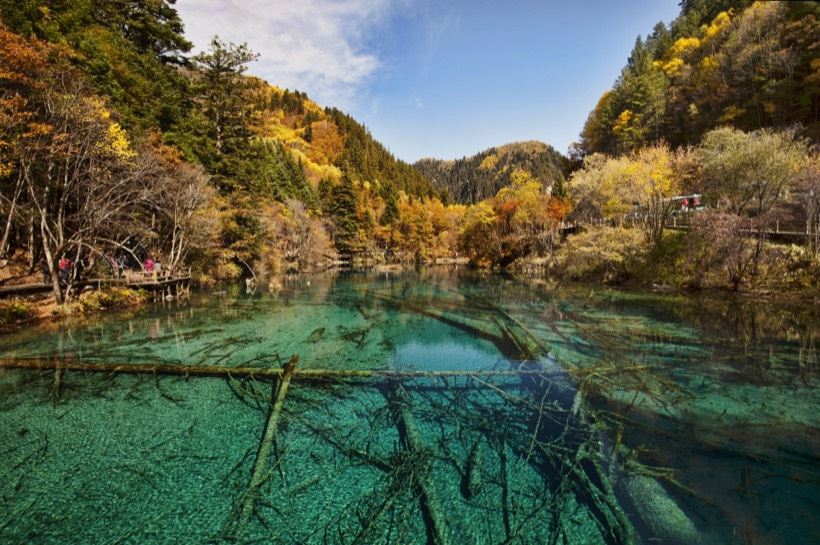
Jiuzhaigou Valley 九寨沟
A hundred and eight lakes in calcium-carbonate blue, stacked down a Y-shaped valley below the Tibetan plateau.
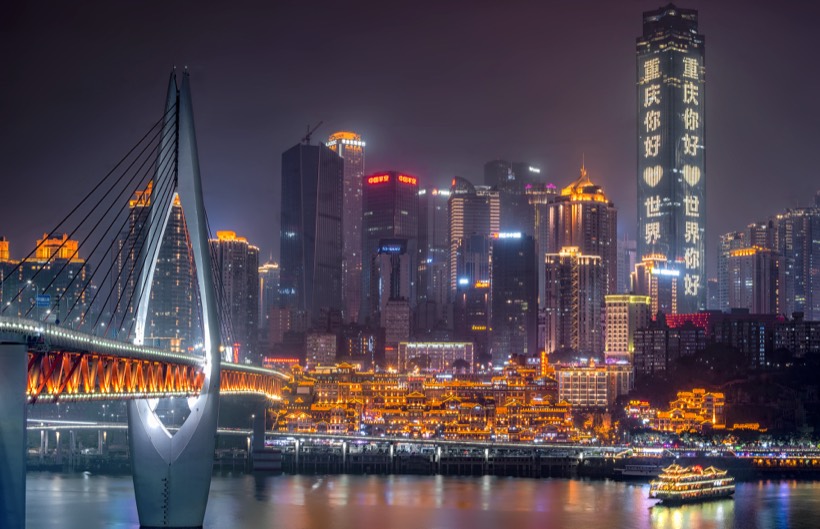
Chongqing 重庆
A city built vertically on cliffs between two rivers, where the metro drives through an apartment block and the ground floor might be the twenty-second.