Fujian Tulou
福建土楼 · Fújiàn Tǔlóu
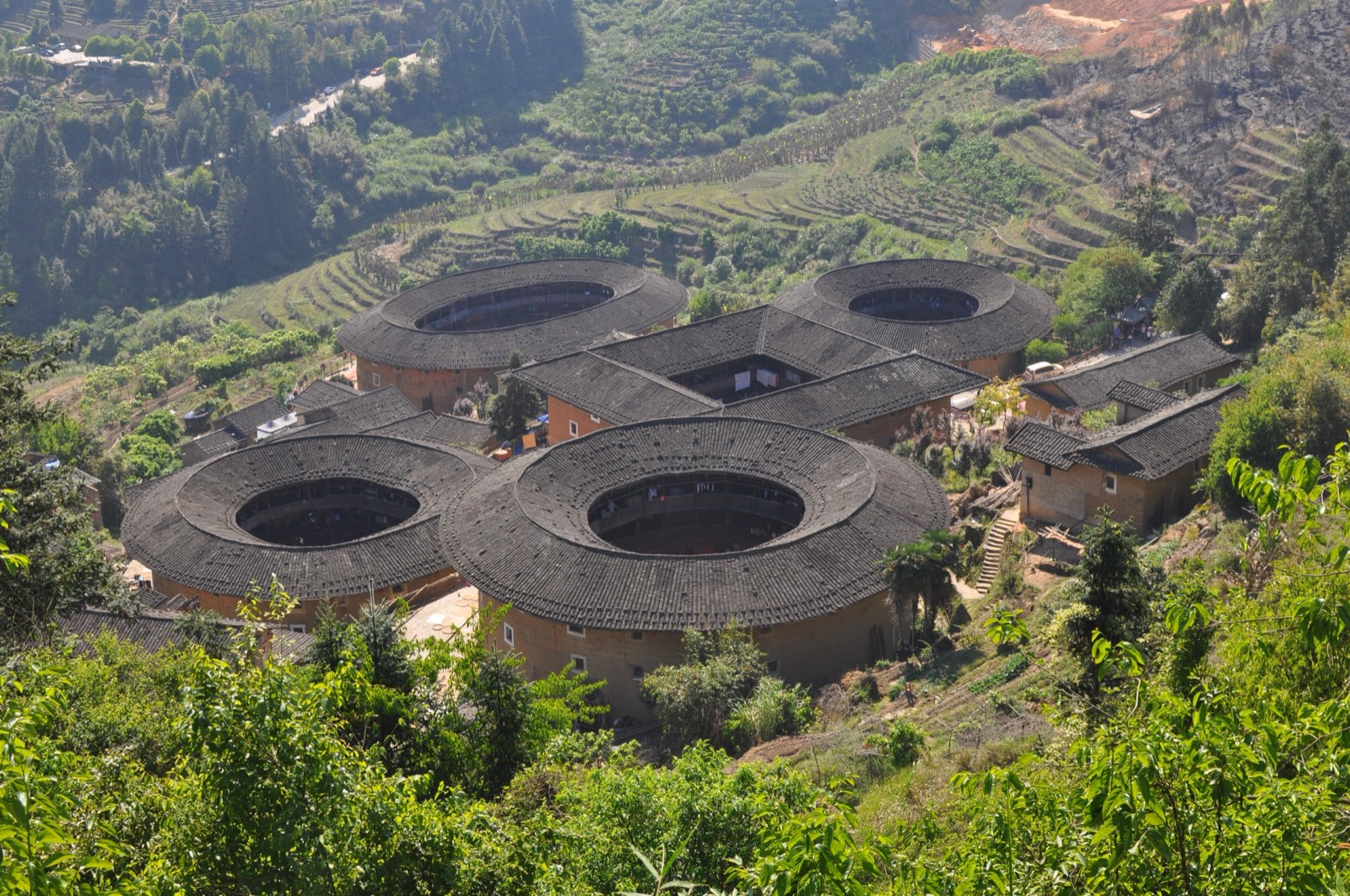
Rammed-earth clan fortresses up to five storeys high and 70 metres across, housing 800 people behind a single door.
Photo: Scott Edmunds · CC BY 2.0 · resized
The Hakka were northern Chinese who migrated south over successive waves of war from the fourth century onwards, arriving as outsiders into already-occupied land. What they built in the Fujian hills reflects that: communal fortified dwellings of rammed earth, timber and bamboo reinforcement, with walls up to two metres thick at the base, a single ironclad gate, no ground-floor windows, and a granary and well inside so a clan could withstand a siege.
Inside, the plan is radically communal and radically egalitarian. Rooms are identical, allocated vertically so each family gets one room on each floor — kitchen on the ground, granary above, bedrooms on top. The ancestral hall stands in the centre of the courtyard. Some 46 tulou across ten sites were inscribed by UNESCO in 2008, but there are more than 20,000 of them in the region, most still inhabited.
There is a persistent story that in the 1980s American analysts studying satellite imagery of Fujian mistook the circular structures for missile silos. It is almost certainly apocryphal and every guide will tell it to you anyway. What is true is that the buildings are structurally extraordinary — several have survived direct earthquake damage, cracked open and then closed again as the earth walls settled.
Why go
- Architecture that is genuinely unlike anything else on earth, and still lived in
- Deep-green tea-hill and bamboo country, largely off the foreign tourist map
- The Hakka clan system explained in physical form
- A natural add-on to Xiamen and Gulangyu, two hours away
Highlights
Tianluokeng cluster
The 'four dishes and a soup' — four round tulou around a square one, seen from a hillside viewpoint above. The single most famous image of the tulou.
Chengqi Lou, Gaobei
The 'king of tulou': four concentric rings, 400 rooms, built in 1709 and still home to several hundred people.
Zhenchenglou, Hongkeng
The most refined interior — a 1912 building with Western-influenced ironwork and an eight-trigram internal division into eight fireproof sections.
Yuchanglou, Xiaban
The 'zigzag building' — its internal timber posts lean visibly out of true and have done for 600 years without falling.
Nanxi valley
A 10 km stretch with dozens of tulou in a row along the river, most of them unticketed and un-touristed.
Photographs
Getting there & practicalities
Getting there
From Xiamen, buses to Nanjing (Fujian, not the city) or Yongding take 2–3 hours; there is also high-speed rail to Nanjing County. Most visitors hire a car and driver for 1–2 days (¥600–800/day) because the clusters are far apart on mountain roads.
Tickets
Each cluster is separately ticketed: Tianluokeng ¥100, Hongkeng ¥90, Gaobei ¥50, Yunshuiyao ¥90. There is no useful combined ticket.
Opening hours
07:30–18:00 broadly, though the villages are lived-in and never really close.
Best time of day
Overnight inside a tulou if you can. Early morning, with the residents up and the mist in the valley, is the best of it.
What everyone gets wrong
- Pick two clusters, not five. They are 40–90 minutes apart and the buildings do become repetitive.
- Staying inside a tulou is possible and cheap (¥80–200). Facilities are basic; the experience is the point.
- These are people's homes. The upper floors of inhabited buildings are usually off-limits — respect the signs.
- Tianluokeng's viewpoint is on the road above the cluster; make sure your driver stops there before descending.
- Combine with Xiamen: two nights on Gulangyu, one night in a tulou, is a very good four-day trip.
What to eat
- Hakka salt-baked chicken and stuffed tofu (niang doufu)
- Wild mushroom and bamboo shoot dishes; local rice wine served warm from the jar
→Combine it with
Nearby and next
 UNESCO
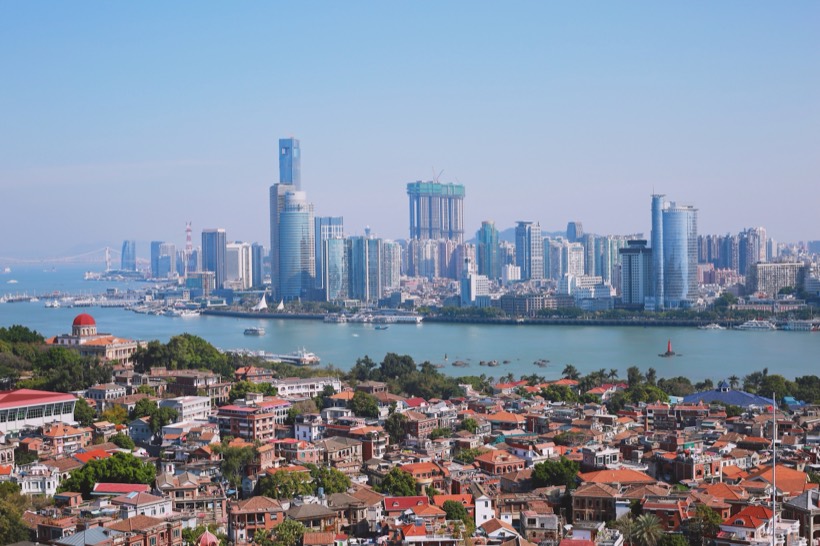
Gulangyu, Xiamen 鼓浪屿
A car-free island of decaying colonial villas, banyan trees and — genuinely — more pianos per head than anywhere on earth.
 UNESCO
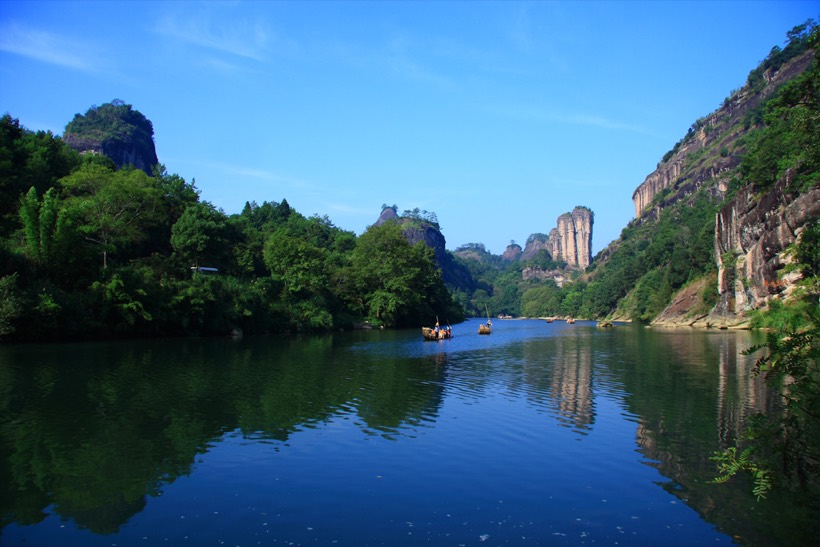
Wuyi Mountains 武夷山
Bamboo rafts down a jade river between red sandstone cliffs, past the terraces that produce the world's most expensive tea.
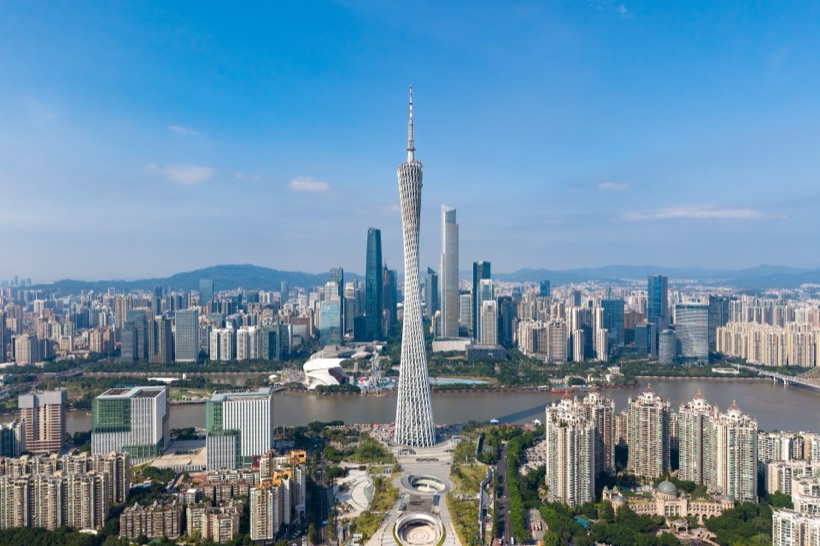
Guangzhou 广州
Canton: two thousand years of foreign trade, the birthplace of dim sum, and the best eating city in China.