Wuyi Mountains
武夷山 · Wǔyí Shān
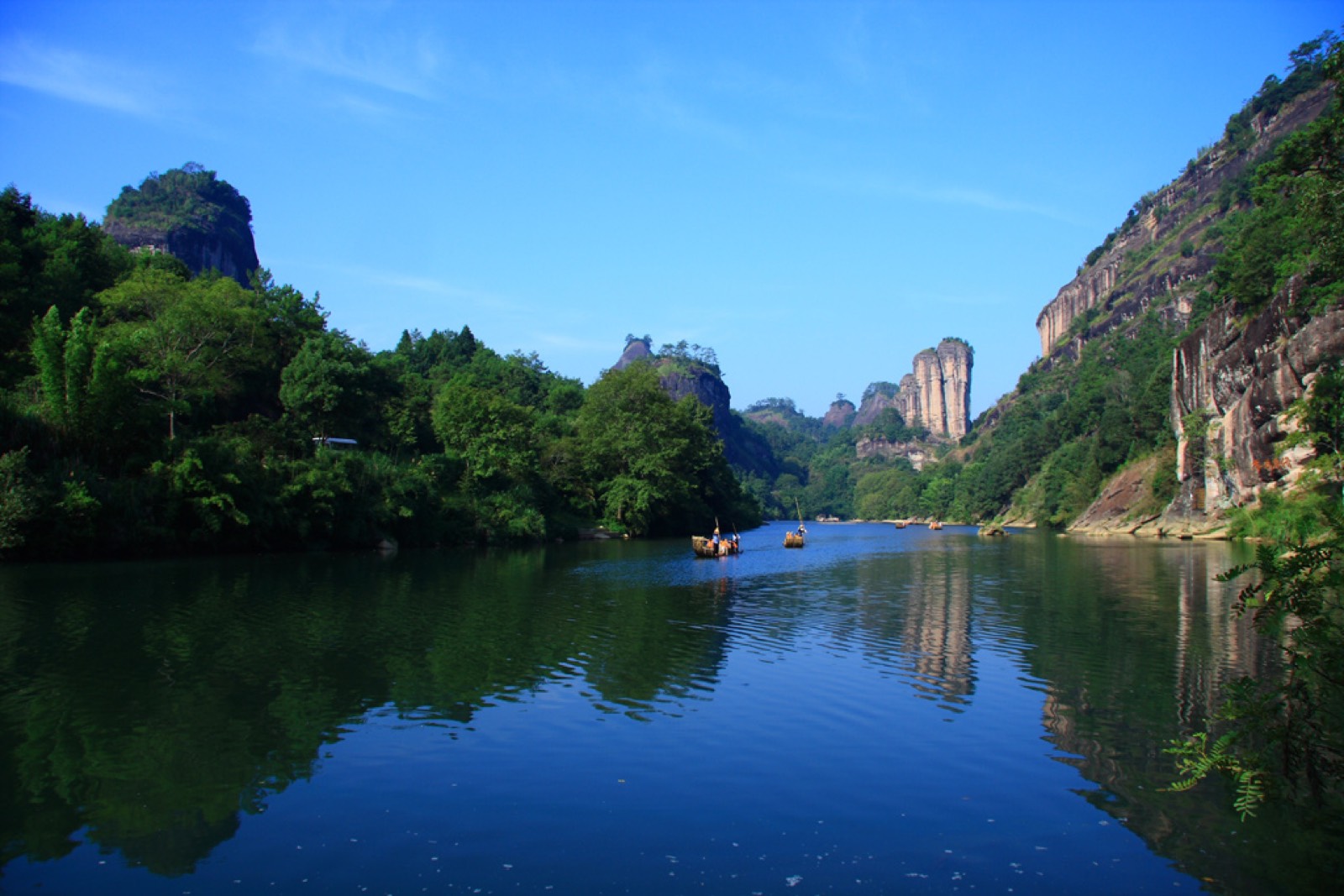
Bamboo rafts down a jade river between red sandstone cliffs, past the terraces that produce the world's most expensive tea.
Photo: Zhangzhugang · CC BY-SA 3.0 · resized
The Wuyi range is a Danxia landform — red sandstone eroded into rounded cliffs and isolated columns — wrapped around the Nine-Bend River, and it is one of the very few Chinese World Heritage sites listed for both natural and cultural criteria. The natural half is a subtropical forest that escaped the last glaciation and holds an extraordinary density of endemic species. The cultural half is Neo-Confucianism: Zhu Xi taught here in the twelfth century, and his synthesis governed Chinese intellectual life for the next seven hundred years.
For most visitors, though, Wuyi means two things. The first is the bamboo raft trip: a 9.5 km, two-hour drift down the Nine-Bend River on a hand-poled raft of lashed bamboo, past cliffs with 3,800-year-old boat-shaped coffins wedged into crevices high above the water, with a boatman keeping up a running commentary. It is touristy and it is also completely wonderful.
The second is tea. Wuyi rock oolong — yancha — is grown in the mineral crevices between the cliffs, and Da Hong Pao from the six surviving mother bushes is, gram for gram, among the most expensive agricultural products on earth. Lapsang souchong, the smoked black tea that started the European tea trade, was invented in Tongmu village here. Tea tourism is well developed and genuinely interesting.
Why go
- The bamboo raft down the Nine-Bend River, one of China's best two hours on water
- Rock oolong tea at source, with plantation walks and serious tasting
- Dual World Heritage listing — the biodiversity here is exceptional
- Far fewer foreign visitors than anywhere else on this list
Highlights
Nine-Bend River raft
Two hours, six passengers per raft, poled downstream through nine bends. Book a morning slot; they sell out and the river gets busy.
Tianyou Peak
848 steps to a viewpoint over the river's coils. The classic overhead shot of the Nine-Bend.
Dahongpao scenic area
A walk through the tea crevices to the six mother bushes of Da Hong Pao, growing on a cliff and now legally unpickable.
Hanging coffins
Boat-shaped coffins of the ancient Minyue people, wedged into cliff crevices up to 3,800 years ago, visible from the raft.
Xiamei ancient village
A Qing tea-trading village that was the eastern start of the 'Tea Road' to Russia. Preserved merchant houses, almost no tourists.
Photographs
Getting there & practicalities
Getting there
Wuyishan East station on the high-speed line: 3h from Shanghai, 2h from Fuzhou, 5h from Guangzhou. There is also a small airport. The scenic area is 15 minutes from town.
Tickets
A 2-day park pass is ¥140 (3-day ¥150). The bamboo raft is a separate ¥130 and must be booked in advance.
Opening hours
Park 06:30–17:00. Rafts run roughly 07:30–15:30, weather permitting.
Best time of day
Book the earliest raft slot; mist on the river before 09:00 is the best of it.
What everyone gets wrong
- The raft is cancelled after heavy rain when the river runs high. Build a spare day into your plan.
- You will get wet feet on the raft. Wear sandals and put your camera in a dry bag.
- Tea shops will pour you a great deal of tea for free. A genuinely good yancha starts around ¥300 for 50 g; anything cheaper labelled Da Hong Pao is a blend.
- Tianyou Peak is 848 steps in humid heat — do it first thing.
- Xiadong Tongmu village, the birthplace of lapsang souchong, requires a permit as it sits in the core reserve; local tea hosts can arrange it.
What to eat
- Bamboo-tube rice, cooked and served in a green bamboo section
- Wuyi smoked duck and river fish; and tea-smoked everything
→Combine it with
Nearby and next
 UNESCO
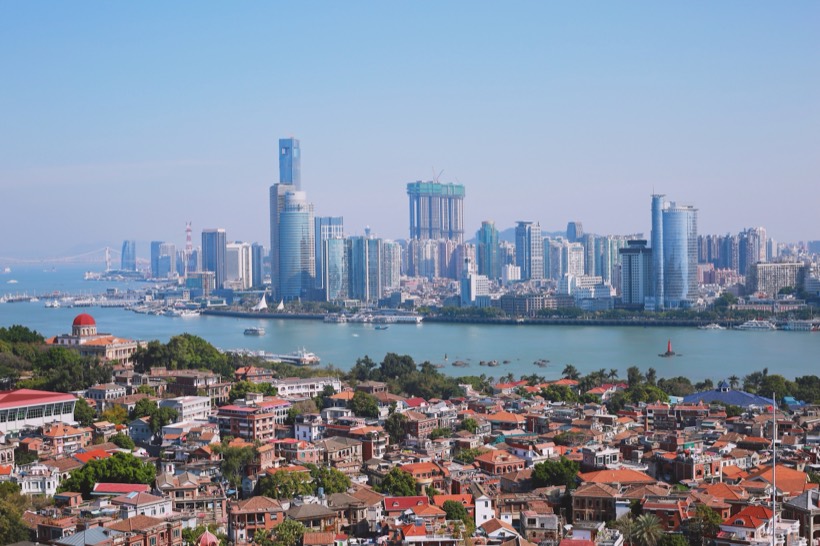
Gulangyu, Xiamen 鼓浪屿
A car-free island of decaying colonial villas, banyan trees and — genuinely — more pianos per head than anywhere on earth.
 UNESCO
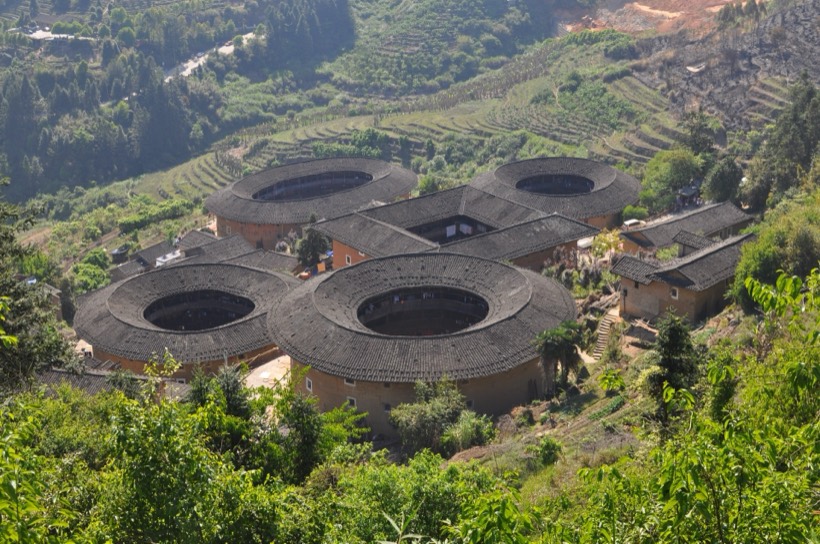
Fujian Tulou 福建土楼
Rammed-earth clan fortresses up to five storeys high and 70 metres across, housing 800 people behind a single door.
 UNESCO
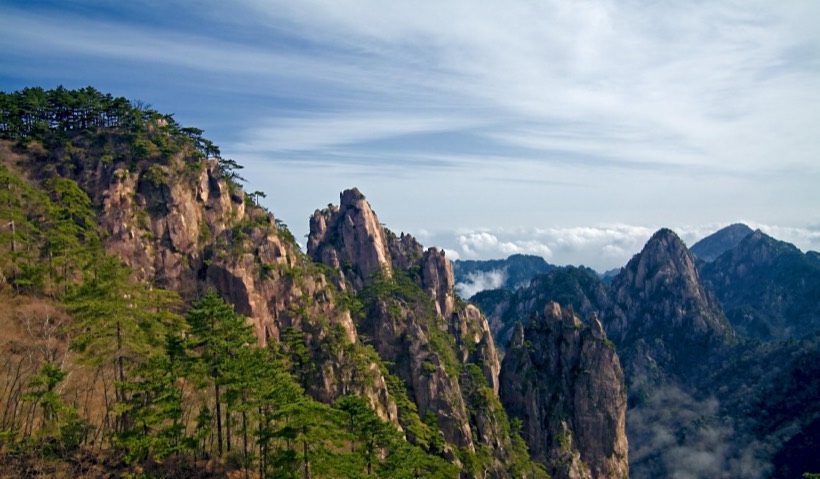
Huangshan (Yellow Mountain) 黄山
Granite spires, twisted pines and a sea of cloud — the mountain that taught Chinese painting what a mountain looks like.