Guizhou: Miao & Dong Country
贵州苗侗村寨 · Guìzhōu Miáo Dòng
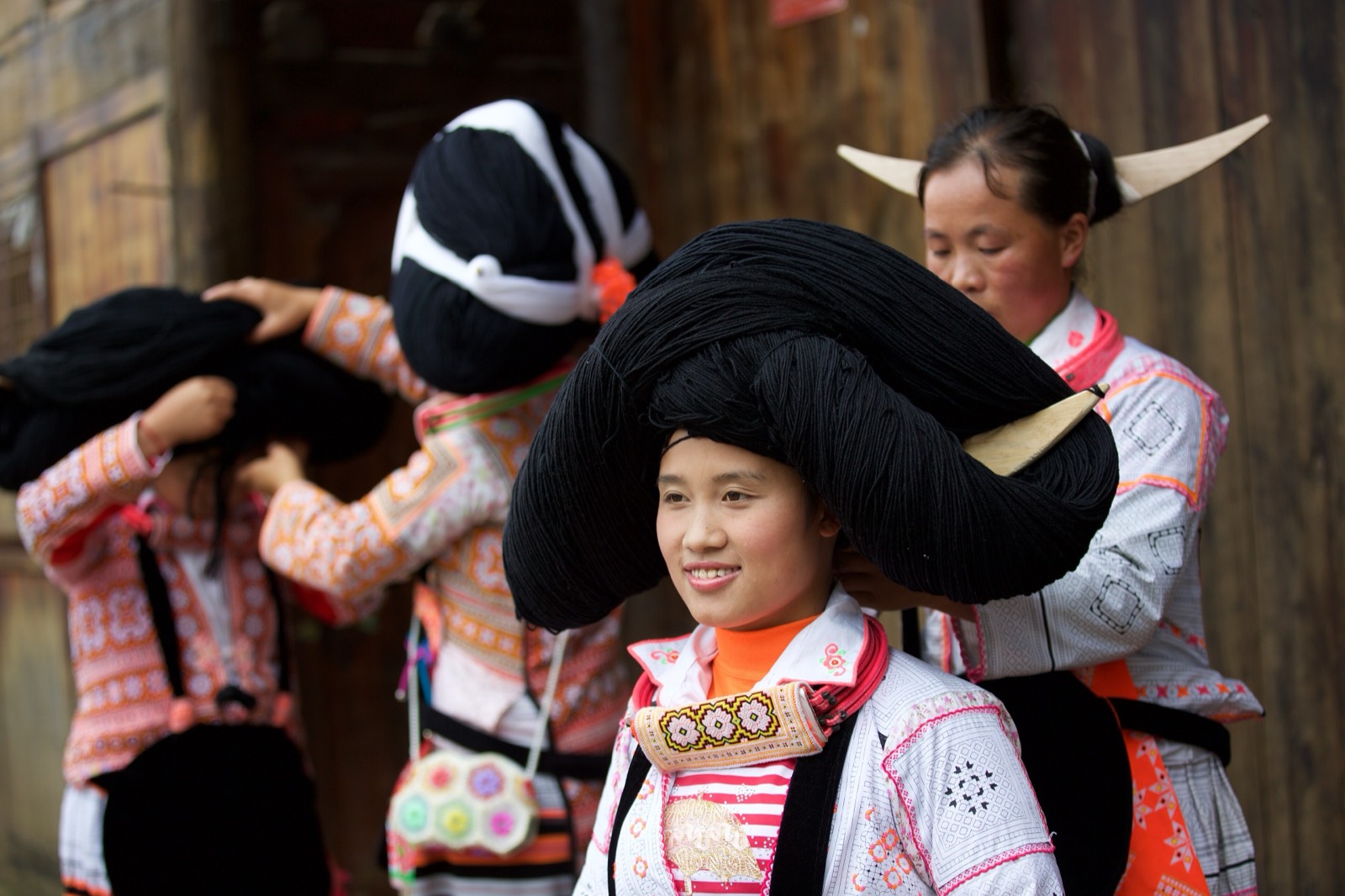
Hillside villages of a thousand stilt houses, silver headdresses weighing ten kilos, and drum towers built without a single nail.
Guizhou is one of China's poorest provinces and one of its most interesting. Mountainous, karst-riddled and historically hard to reach, it became a refuge for peoples pushed out of the plains — 37% of the population belongs to a minority group, principally Miao (Hmong) and Dong, and the isolation preserved traditions that were flattened elsewhere.
The Miao build on hillsides in stacked wooden stilt houses; Xijiang Qianhu Miao Village — 'thousand-household Miao village' — has over 1,200 of them terraced up two facing slopes, and at night, lit, it looks like a galaxy. Miao silverwork is the other signature: festival headdresses and collars weighing up to 10 kg, worn by young women at the Sisters' Meal and Lusheng festivals, which are genuinely among the best cultural spectacles in Asia.
The Dong, further southeast around Zhaoxing and Chengyang, build differently — drum towers of interlocking timber up to thirteen storeys with no nails, and covered 'wind and rain bridges' over every river. They also sing: the Dong Grand Song is a polyphonic, unconducted choral tradition inscribed by UNESCO, and hearing it performed in a village hall rather than on a stage is worth restructuring a trip for.
Why go
- The richest living minority culture in China, and far less packaged than Yunnan's
- Festivals — Sisters' Meal in April, Lusheng in autumn — that are real rather than staged
- Huangguoshu, the largest waterfall in China, in the west of the province
- High-speed rail now crosses the province, which has transformed access
Highlights
Xijiang Qianhu Miao Village
1,200 stilt houses on two hillsides. Touristed and still spectacular, especially from the upper viewpoint at dusk. Stay overnight.
Zhaoxing Dong Village
Five drum towers, five wind-and-rain bridges, and a working village that has kept its scale. The best base in Dong country.
Tang'an & Jitang
Hill villages an hour's walk above Zhaoxing, with terraced fields and almost no visitors. This is where the Grand Song is still sung informally.
Huangguoshu Waterfall
77 m high and 101 m wide, with a cave walkway that goes behind the curtain. Best from June to October when the flow is high.
Zhenyuan ancient town
A river town in a gorge with Ming walls climbing the hillside and a Buddhist-Daoist cliff temple. Underrated.
Festivals
Sisters' Meal (Miao, around April), Lusheng festivals (autumn and New Year), and Dong New Year. Dates follow the lunar calendar — check before planning.
Photographs
Getting there & practicalities
Getting there
High-speed rail: Guiyang to Kaili South (30 min, for Xijiang) and Congjiang (for Zhaoxing, 1h). Guangzhou to Congjiang is 4h. Guiyang has a large airport. Local minibuses and hired cars cover the last 30–60 minutes to villages.
Tickets
Xijiang ¥110 including the shuttle. Zhaoxing ¥80. Huangguoshu ¥160 plus ¥50 shuttle. Many smaller villages are free.
Opening hours
Villages are lived-in and open. Huangguoshu 07:30–18:00.
Best time of day
April–June for terraces and festivals; September–October for harvest and clear weather. Winter is cold, damp and grey.
What everyone gets wrong
- Xijiang is the packaged version. Use it as an introduction, then go to smaller villages — Langde, Jidao, Basha — for the real thing.
- Basha Miao village still holds a state permit for its men to carry hunting rifles, and has a hair-cutting ceremony performed with a sickle. It is not a show.
- Festival dates move with the lunar calendar and are announced late. Ask a Guizhou-based operator rather than relying on published dates.
- Roads between villages are slow mountain roads. Budget more transfer time than the distances suggest.
- A driver for 3–4 days (¥500–600/day) makes this trip; public transport makes it an ordeal.
What to eat
- Sour fish soup (suantang yu) — Guizhou's defining dish, fermented tomato and rice broth
- Miao glutinous rice, smoked pork and rice wine at a long-table dinner
- Ciba and folded-ear root (zhe'ergen), an acquired taste that Guizhou people love
→Combine it with
Nearby and next
Longji Rice Terraces 龙脊梯田
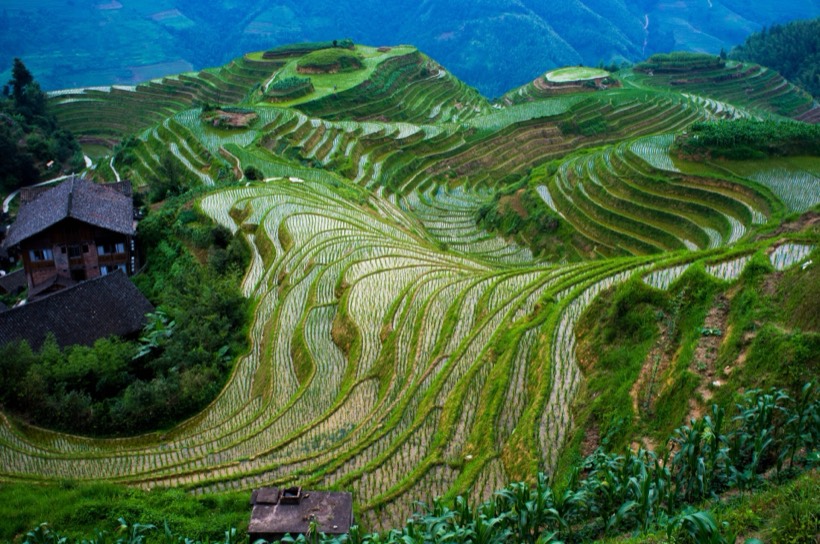
Seven hundred years of hand-cut terracing wrapped around whole mountains, from riverbank at 300 m to ridge at 1,100 m.
 UNESCO
Yuanyang Rice Terraces 元阳梯田
Sixteen hundred years of Hani terracing across a whole mountain range — and in winter, at dawn, the flooded fields turn to fire.
 UNESCO
Zhangjiajie 张家界
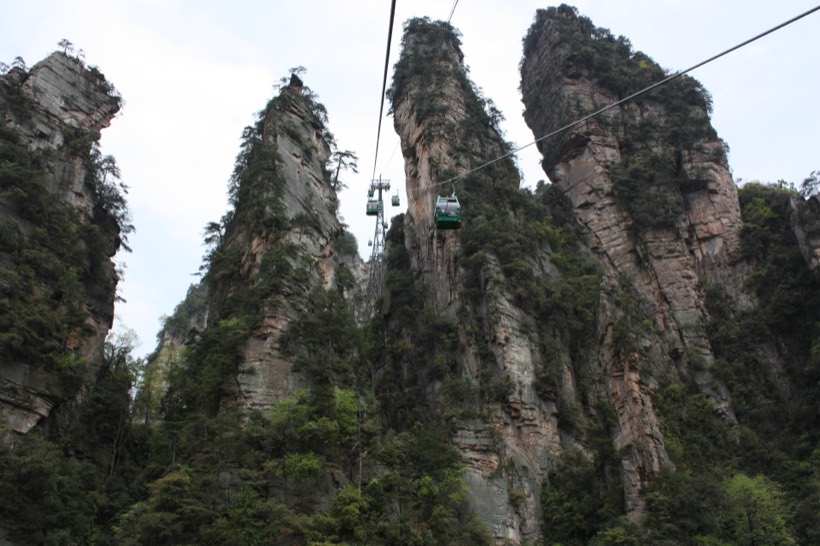
Three thousand quartz-sandstone pillars rising out of the cloud — the mountains Avatar borrowed and never gave back.