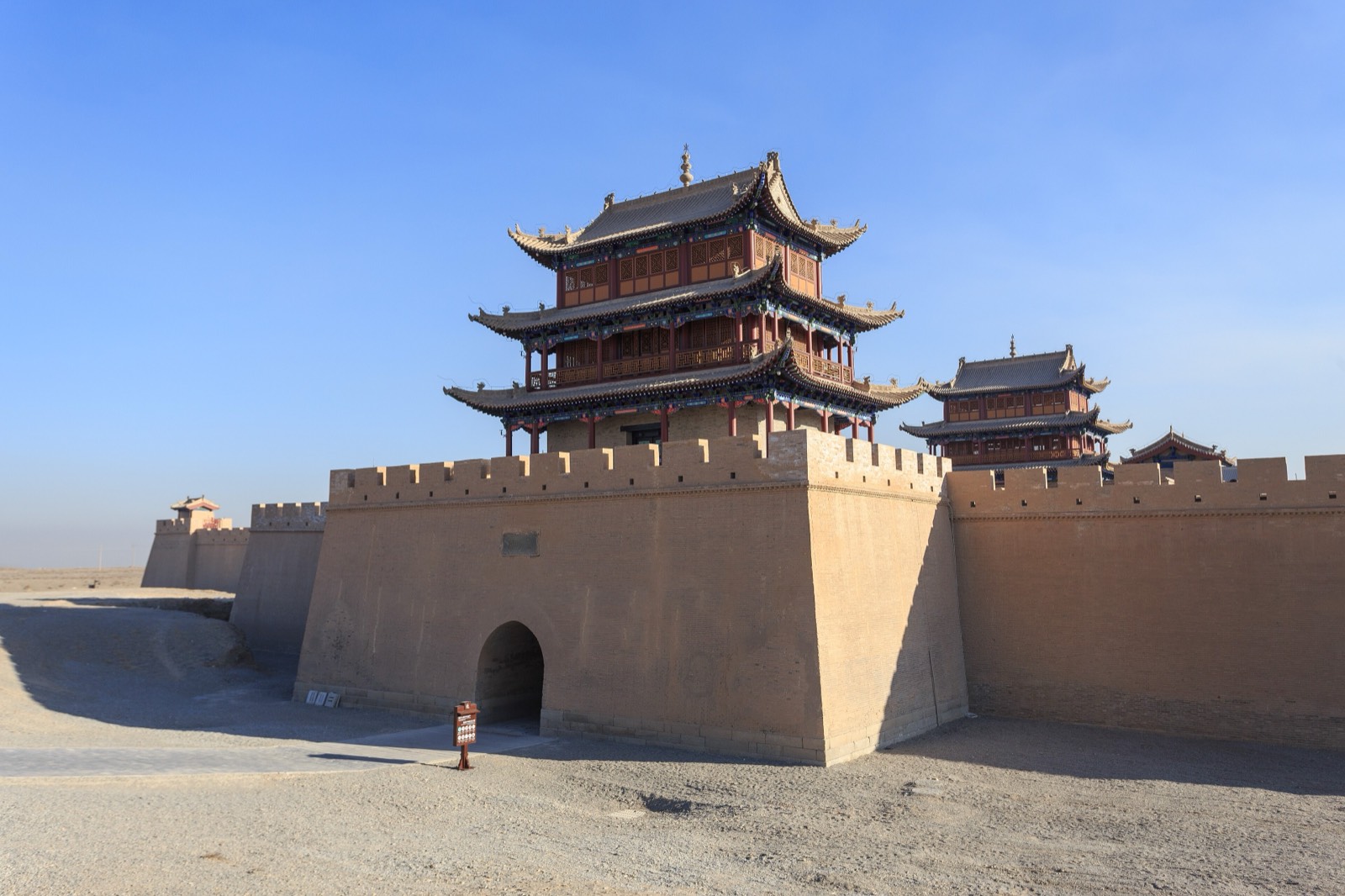
The Silk Road
丝绸之路
Desert forts, painted caves and oasis bazaars along the Hexi Corridor.
Photo: Zhangzhugang · CC BY-SA 4.0 · resized
For 1,500 years the road west out of Chang'an carried silk, horses, Buddhism, paper and plague between China and the Mediterranean. What survives is a chain of extraordinary sites strung along a modern high-speed rail line: the Buddhist grottoes at Maijishan and Bingling, the Ming fortress at Jiayuguan where the Great Wall ends, the singing sand dunes and 492 painted caves of Dunhuang, and the Uyghur old towns of Kashgar and Turpan.
06Covered in depth
6 destinations in this theme
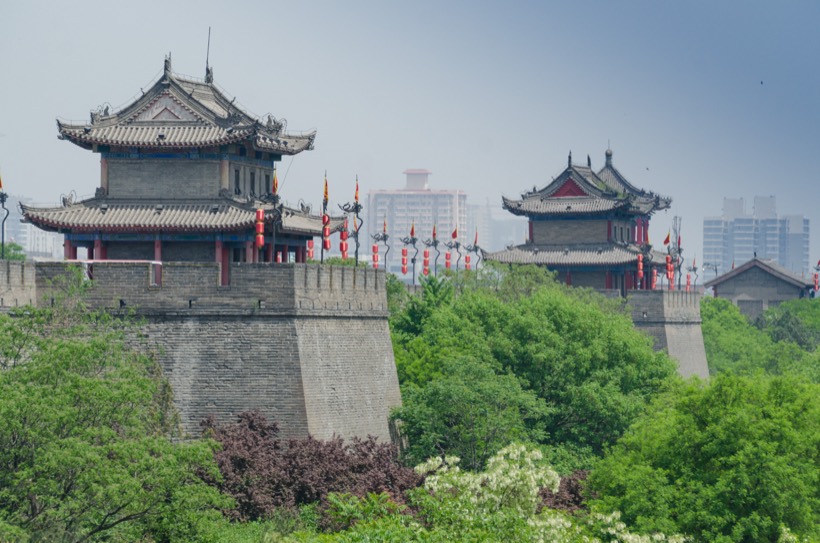
Xi'an Old City 西安古城
Cycle the most complete city wall in China, then eat your way through a Muslim quarter that has been here for 1,300 years.
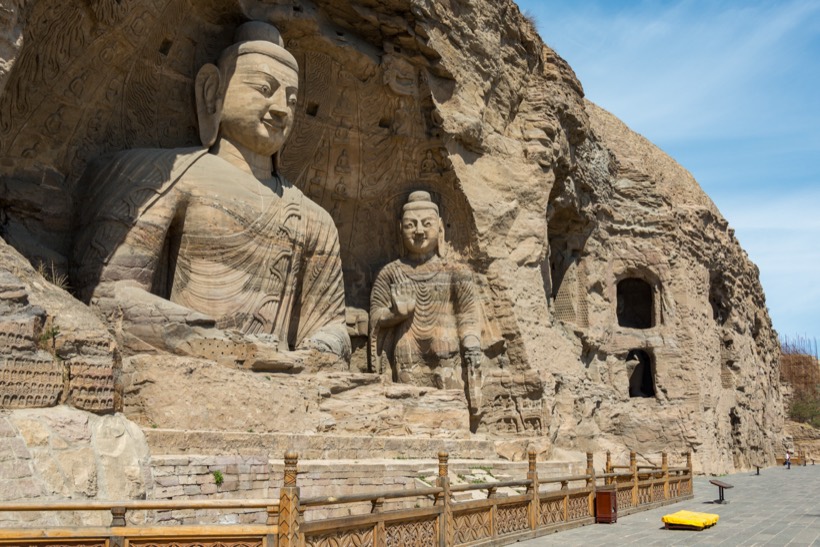 UNESCO
Yungang Grottoes & Datong 云冈石窟
Fifty-one thousand Buddhist statues carved into a sandstone cliff in the 460s, when the idea was still arriving from India.
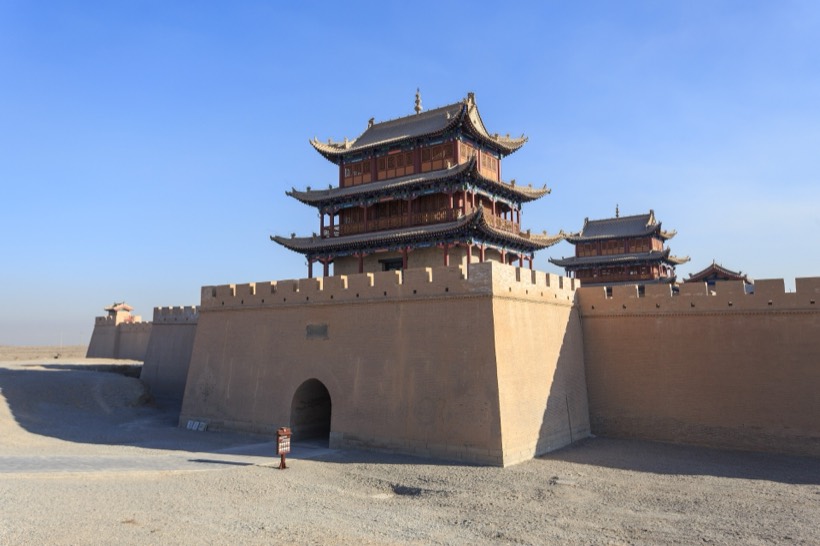 UNESCO
Jiayuguan Fort 嘉峪关
Where the Great Wall ends: a Ming fortress in the desert, between a snow range and the Gobi, that marked the edge of the civilised world.
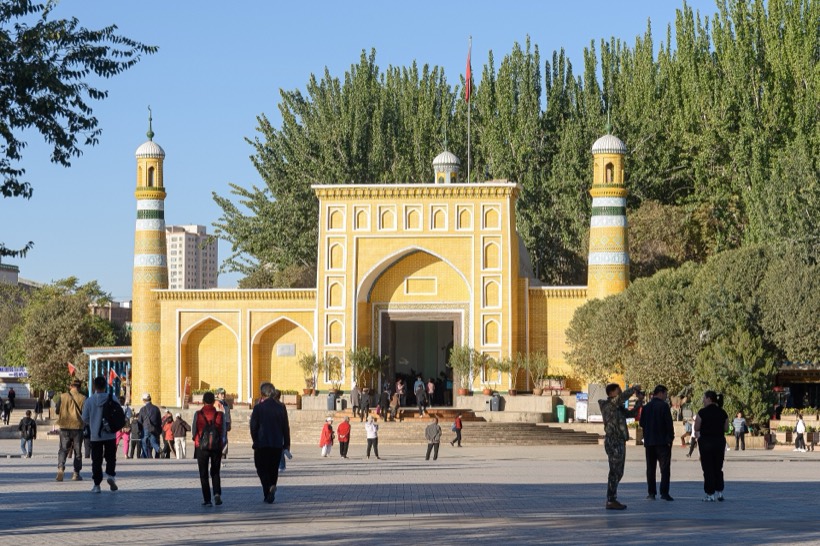
Kashgar 喀什
Closer to Baghdad than to Beijing: a Uyghur oasis city where the Karakoram, Pamir and Tian Shan ranges meet.
 UNESCO
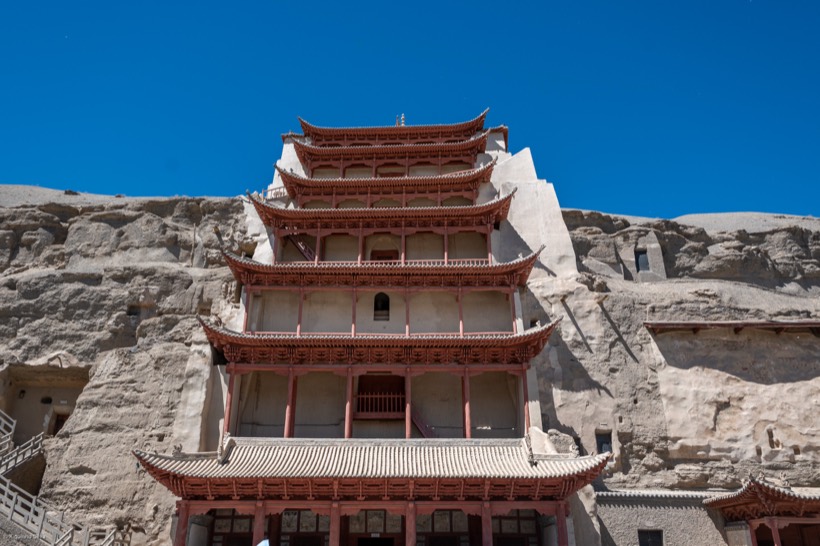
Mogao Caves & Dunhuang 莫高窟与敦煌
Four hundred and ninety-two painted caves in a desert cliff — a thousand years of Buddhist art, sealed and forgotten for nine centuries.
 UNESCO
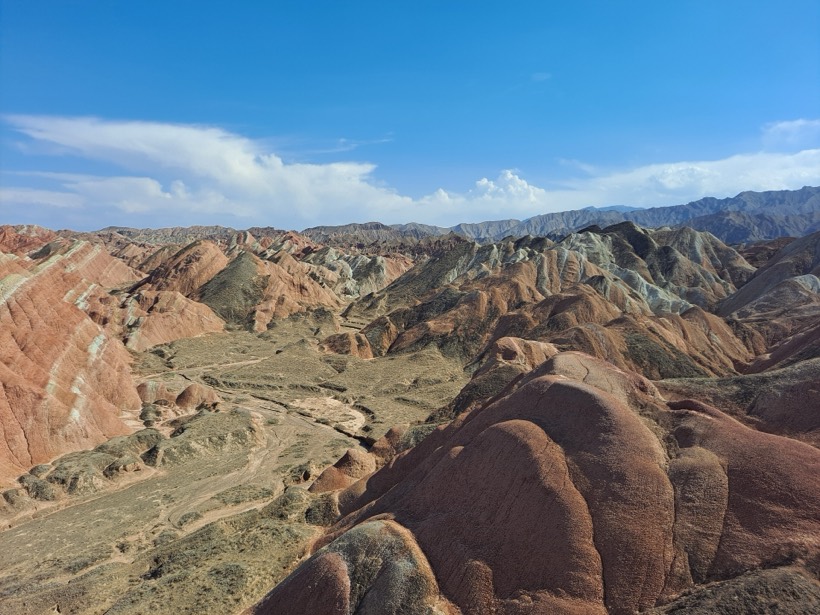
Zhangye Danxia 张掖丹霞
Hills striped in red, orange, yellow and green — twenty-four million years of mineral sediment tilted on its side.
+Also worth knowing
12 more from the full index
-
Qikou & the Yellow River碛口 Shanxi
A Qing river port of stone warehouses on the loess bank, with cave dwellings above and almost no tourism.
-
Famen Temple法门寺 Shaanxi
A crypt sealed in 874 and reopened in 1987, containing a finger bone of the Buddha and the finest Tang gold and glass ever found.
-
Badain Jaran Desert巴丹吉林沙漠 UNESCO Inner Mongolia
The world's tallest stationary dunes — up to 500 metres — with spring-fed lakes between them and a lone desert monastery.
-
Ejina Poplar Forest额济纳胡杨林 Inner Mongolia
Ancient desert poplars that turn brilliant gold for about three weeks each October. A serious pilgrimage for Chinese photographers.
-
Quanzhou泉州 UNESCO Fujian
Marco Polo's Zayton, the greatest port in the medieval world, with mosques, Hindu carvings and Manichaean remains side by side.
-
Turpan吐鲁番 UNESCO Xinjiang
154 m below sea level, 48°C in summer: the ruined cities of Jiaohe and Gaochang, Buddhist caves, and 5,000 km of underground karez irrigation.
-
Maijishan Grottoes麦积山石窟 UNESCO Gansu
194 caves of painted clay sculpture on a haystack-shaped cliff, reached by vertigo-inducing external walkways.
-
Bingling Temple炳灵寺 UNESCO Gansu
Grottoes reached only by boat across the Yellow River reservoir, with a 27-metre Tang Maitreya.
-
Sand Lake & Shapotou沙湖与沙坡头 Ningxia
Where the Tengger desert meets the Yellow River: dune sledging, sheepskin-raft crossings and reed-bed birdlife.
-
Western Xia Tombs西夏王陵 Ningxia
Nine eroded earthen mausoleums of a kingdom Genghis Khan erased, standing alone under the Helan Mountains.
-
Chaka & Yadan察尔汗与雅丹 Qinghai
Salt flats and wind-carved yardang badlands in the Qaidam basin, including the 'Emerald Lake' potash ponds.
-
Tulufan Bezeklik Caves柏孜克里克 Xinjiang
Uyghur-era Buddhist caves in a red desert gorge, their murals largely removed to Berlin and destroyed in 1945.